Spaghetti squash earns its name honestly: once it’s cooked, the flesh forks apart into long, pasta-like strands that make a wonderfully light stand-in for noodles. The texture is similar enough to pasta that it happily soaks up your favorite sauces, and the flavor stays mild and a little sweet. It isn’t a perfect one-to-one swap for a bowl of semolina spaghetti, but that gentle squash flavor is exactly what makes it so versatile. In this guide, we’re going to walk you through our favorite method for how to cook spaghetti squash in the oven, plus how to prep a big batch so it’s ready all week.
Why You’ll Love This Method
- Naturally lighter than pasta — a great way to add more veggies to dinner without giving up that twirl-on-your-fork feel.
- Hands-off cooking — the oven does the work while you make sauce or prep the rest of the week.
- Meal-prep friendly — one squash yields several servings that store and reheat beautifully.
- Endlessly flexible — pair it with marinara, pesto, browned butter, or just olive oil and parmesan.
What You’ll Need
- 1 spaghetti squash (about 3–4 lbs)
- Salt (for drawing out moisture)
- Olive oil (optional, for roasting)
- Your favorite sauce or toppings for serving
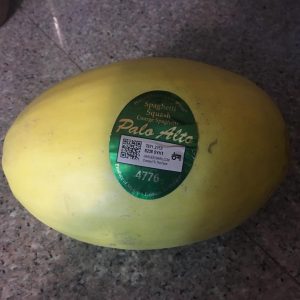
Spaghetti squash is a yellow, oval-shaped squash that looks a bit like a small melon or pumpkin. The skin is thick and tough, so a little equipment goes a long way. A sturdy cutting board and a genuinely sharp blade make all the difference here — if yours has seen better days, a good quality chef’s knife makes cutting through that skin far safer and easier.
How to Prepare the Squash
- Slice off both ends of the squash so it has flat, stable surfaces.
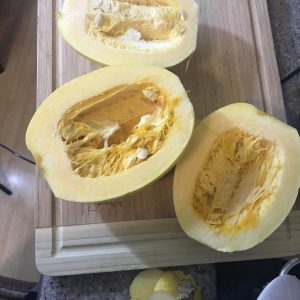
- Stand it up on one cut end and slice cleanly down through the middle lengthwise. Go slowly and keep your fingers clear — this is a firm squash, so use caution.
- Using a spoon, scoop out the loose stringy pulp and seeds from the center of each half. (If it feels a lot like carving a pumpkin, that’s because they’re both in the squash family!)
The Salting Trick
Here’s our favorite little step: liberally salt the cut halves and let them rest for about 10–15 minutes. The salt draws out excess moisture, which helps the cooked strands turn out firmer and last longer in the fridge — a real bonus for meal prep. Let them sweat while the oven preheats, then rinse the salt off and pat the halves dry with a paper towel before roasting.
How to Cook Spaghetti Squash in the Oven
- Preheat your oven to 425°F.
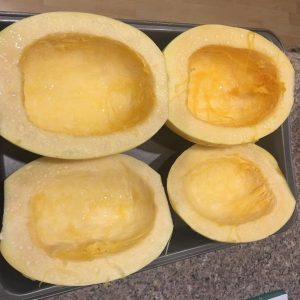
- Place the rinsed, dried halves cut side down on a baking sheet. For easy cleanup, line it with parchment paper — a flat, rimmed half-sheet baking pan is perfect for this and roasts the squash evenly.
- Roast for 35–45 minutes, or until the flesh is tender when pierced with a fork.
- Remove from the oven and let the halves cool for a few minutes until they’re comfortable to handle.
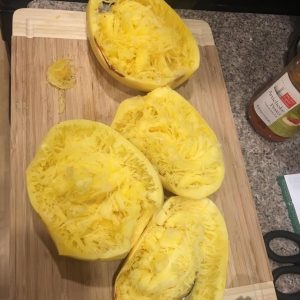
- Drag a fork lengthwise across the flesh — it should separate from the skin easily and come away in long, spaghetti-like strands.
Meal Prep & Storage Tips
Cooked spaghetti squash is a meal-prep dream. Once the strands have cooled, portion them into airtight containers.
- Fridge: store cooked strands for up to 4–5 days. The salting step really helps keep them from getting watery.
- Freezer: freeze in portioned bags or containers for up to 3 months. Thaw overnight in the fridge and drain any extra liquid before reheating.
- Reheat: warm gently in a skillet over medium heat (our favorite — it drives off extra moisture) or microwave in 30-second bursts.
For a complete make-ahead dinner, pile the strands into bowls and top with a protein. Our turkey spaghetti squash meal prep uses this exact roasting method as its base. New to batch cooking altogether? Start with our beginner’s guide to meal prep.
Substitutions & Variations
- Marinara & parmesan — the classic, closest to a bowl of spaghetti.
- Pesto — toss the warm strands with basil pesto and a squeeze of lemon.
- Garlic browned butter — simple, rich, and ready in minutes.
- Low-carb pizza night — serving a low-carb crowd? Pair it with our low-carb cauliflower pizza crust for a veggie-forward dinner.
Nutrition Notes
Spaghetti squash is a light, veggie-based side that brings fiber and a satisfying volume to the plate. Because the flavor is so mild, it takes on whatever seasonings and sauces you love, making it an easy way to round out a balanced meal-prep menu.
Frequently Asked Questions
How do I know when spaghetti squash is done?
It’s ready when a fork slides easily into the flesh and the strands separate cleanly from the skin. If it still feels firm, give it another 5–10 minutes. Avoid overcooking, or the strands can turn mushy.
Why is my spaghetti squash watery?
Excess moisture is the most common complaint. Salting the halves before roasting draws out a lot of that water, and roasting cut side down helps it drain. Reheating cooked strands in a hot skillet also cooks off any remaining liquid.
Do I need to peel spaghetti squash?
No peeling required. You roast it in the skin, then simply scrape the cooked strands out with a fork and discard the skin.
Can I cook spaghetti squash ahead of time?
Absolutely — that’s what makes it so meal-prep friendly. Roast it, shred it, and store the strands in the fridge for up to 4–5 days or freeze for up to 3 months.
How big is one spaghetti squash serving?
A 3–4 lb squash typically yields about 3–4 servings, depending on whether it’s a main or a side. It’s easy to scale up by roasting a couple at once.
That’s it — a simple, foolproof way to turn one humble squash into a week of light, sauce-ready dinners. Give it a try next time it’s in season, and let us know your favorite way to serve it in the comments below!